Reduce waste, eliminate redundancies, and maximize your ROI with a structured approach to SaaS spending optimization.
This guide explains how SaaS spending optimization helps IT and finance teams regain visibility and control over distributed software investments.
A SaaS spend optimization platform must prioritize visibility, governance, and automated cost control. At its core, a SaaS cost optimization tool is designed to help IT and finance leaders discover, manage, and continuously optimize SaaS applications across the organization.
To deliver on that promise, the platform must be built on a set of foundational capabilities that turn visibility into action and data into measurable savings.
An application discovery engine automatically detects both sanctioned and unsanctioned applications across your environment. It scans SSO logs, financial systems, ERP data, and browser activity to build a unified inventory of the tools in use. This eliminates blind spots caused by decentralized purchasing. With continuous monitoring, newly introduced apps are identified in real time instead of during annual audits.
License usage analytics goes beyond counting active accounts. It tracks the login frequency, feature utilization, and engagement depth to determine whether a user truly needs their assigned tier. When inactivity crosses a predefined threshold, such as 30 days, the system flags the license for review or reclamation. This prevents overprovisioning and ensures subscriptions match actual usage patterns.
Renewal and contract intelligence centralizes vendor agreements, renewal dates, pricing terms, and minimum seat clauses. Automated alerts notify stakeholders 30, 60, or 90 days before renewal deadlines. This prevents auto-renewal surprises and gives procurement teams time to negotiate better terms. Clear contract visibility also helps teams identify opportunities to consolidate vendors or downgrade plans.
Shadow IT identification uncovers applications purchased outside formal procurement channels. By cross-referencing financial transactions and access logs, the system highlights unauthorized or unmanaged tools. This reduces security risks and helps ensure sensitive company data is not stored on noncompliant platforms. Continuous detection also discourages redundant or duplicate subscriptions across departments.
Role-based access and compliance controls align application access with employee life cycle events. When an employee joins, changes roles, or exits, the system automatically adjusts their permissions. This supports frameworks such as SOC 2 and ISO/IEC 27001 by maintaining proper access governance. Automated deprovisioning reduces data breach risks while reinforcing audit readiness.
Through 2027, companies lacking centralized SaaS visibility and life cycle management will overspend by at least 25% from unused licenses and redundant tools.
Choose a tool that integrates with HR and finance tools to automate license revocation when employees exit.
Manual audits without automated discovery often overlook a substantial portion of SaaS applications in midsize organizations.
Selecting the right SaaS cost optimization tool depends on your organization's size, operational complexity, and governance maturity. The platform you choose should not only provide visibility but also enable automation and long-term scalability. A structured evaluation framework helps prevent short-term decisions that lead to buyer's remorse later.
To make a confident, future-ready decision, evaluate potential tools against a clear set of functional and strategic benchmarks.
Begin by integrating SaaS Manager Plus with identity providers such as JumpCloud, Azure, or Okta. This connection pulls accurate user-to-license mappings directly from your SSO environment. By syncing identity data, you gain visibility into who has access to which applications and at what permission level. This foundation ensures that all optimization decisions are based on verified access records rather than manual spreadsheets.
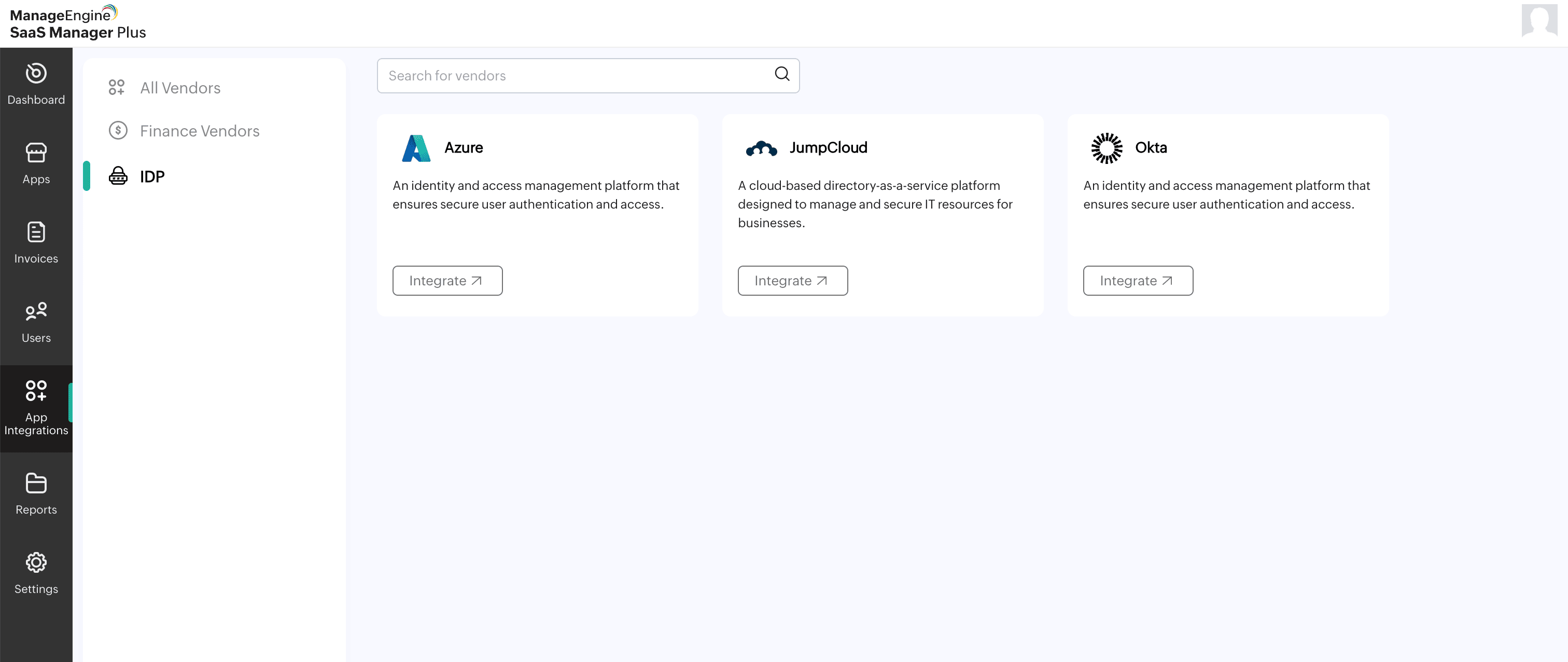
Once identity systems and financial applications are integrated, SaaS Manager Plus automatically begins discovering applications and pulling usage data. There is no separate step required to enable discovery. The platform scans financial transactions, license usage records, and SSO logs to detect both sanctioned and unsanctioned applications in the background.
This automated process builds a centralized, continuously updated inventory of all SaaS subscriptions in use. As new tools are introduced into the environment, they are identified during scheduled sync cycles. This reveals hidden or unmanaged spending without requiring manual intervention from administrators.
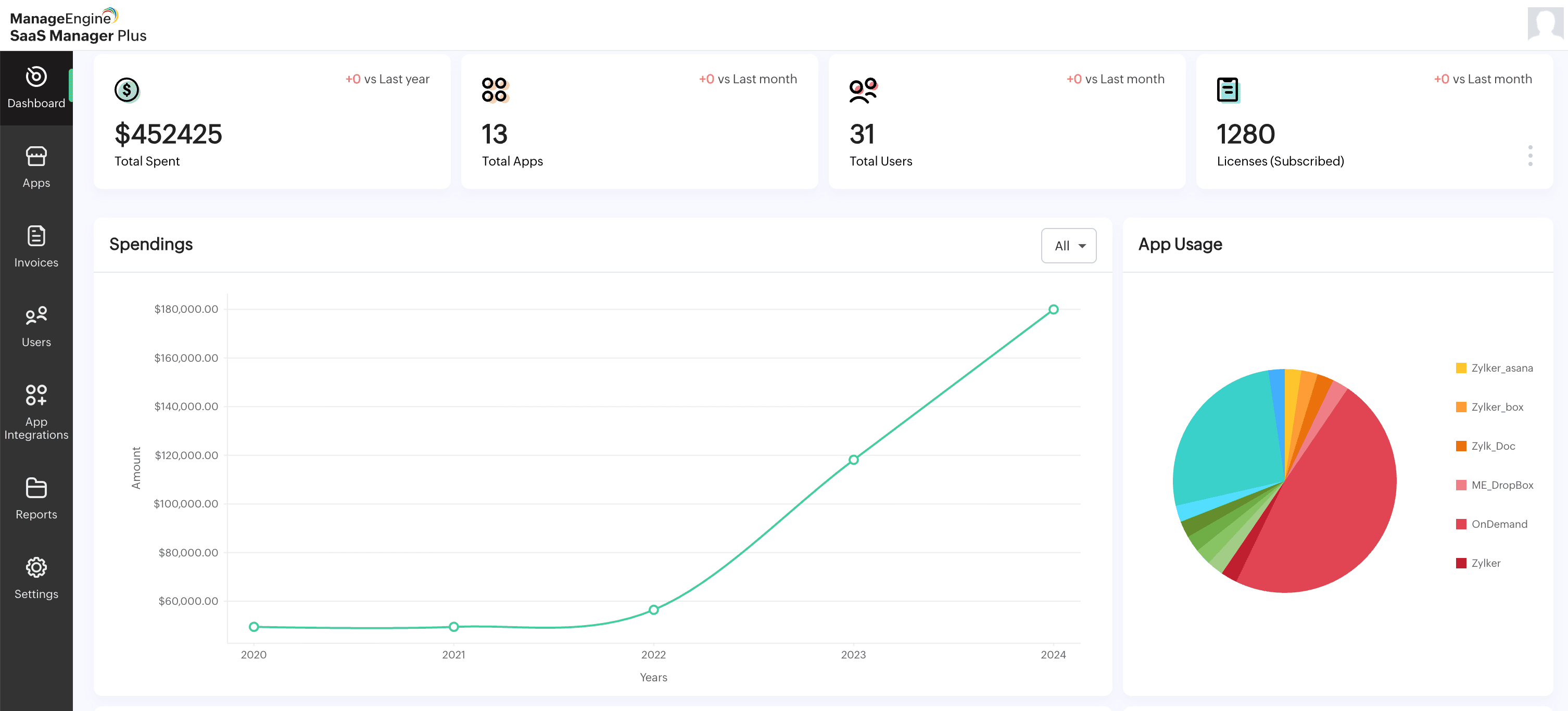
With discovery complete, analyze usage behavior across applications. The platform evaluates the login frequency, feature usage, and inactivity duration. Based on your threshold, such as 30 days of inactivity, you can review licenses before their renewal dates. This data-driven insight removes guesswork and highlights immediate cost reduction opportunities.
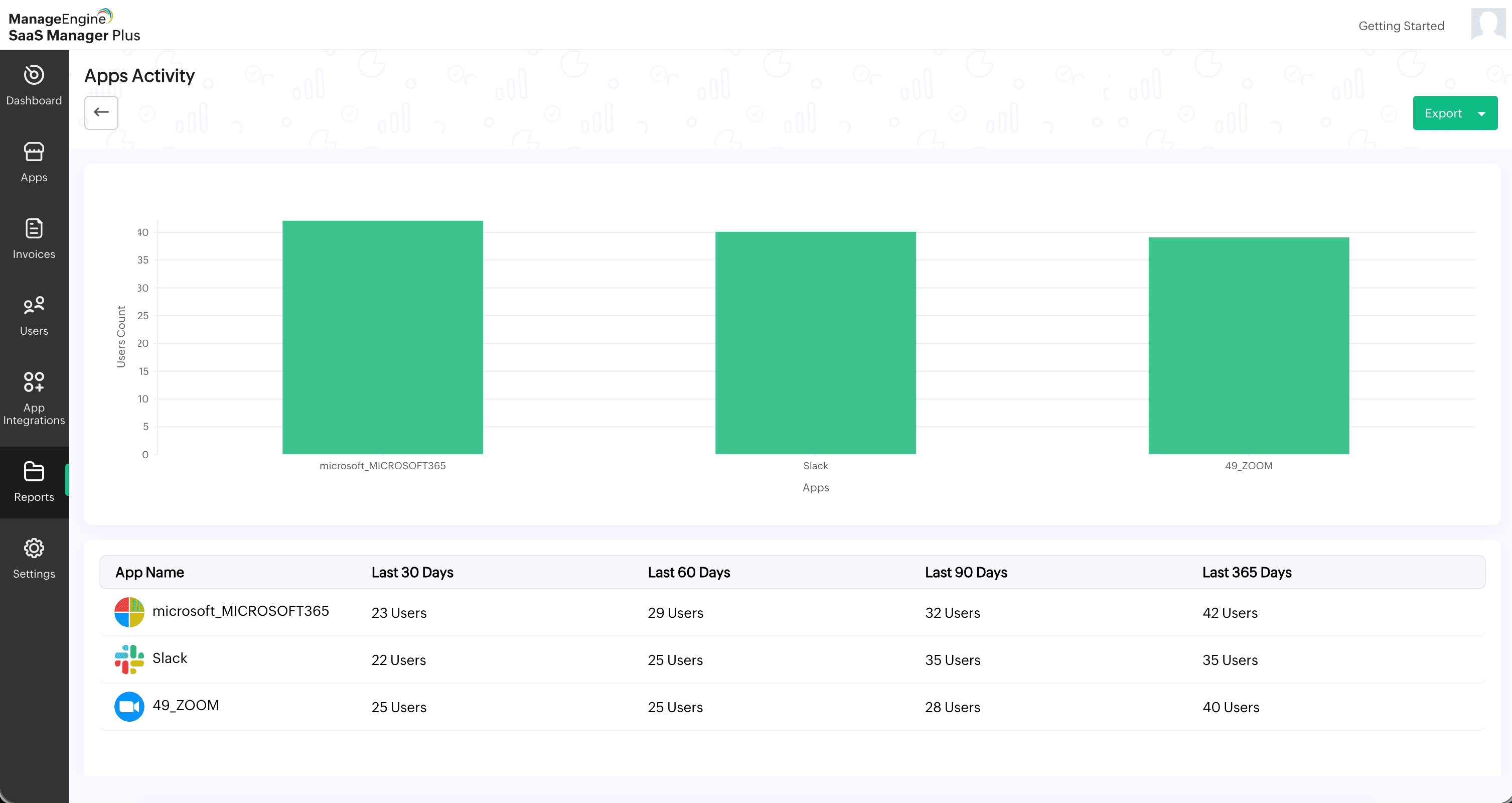
After identifying inactive accounts, IT administrators can revoke unused licenses with minimal disruption and reassign them to active employees who require access. This ensures that administrators are continuously rightsizing licenses instead of accumulating unused seats.
Finally, monitor invoice life cycles through the Dashboard or Invoices tab. SaaS Manager Plus sends alerts before license expirations based on the user's renewal reminder email configuration. Once the alert settings are enabled, procurement teams receive timely notifications that provide sufficient lead time for renegotiating, downgrading, or consolidating plans. This ensures renewals are intentional and data-driven rather than triggered by default auto-renewal clauses.
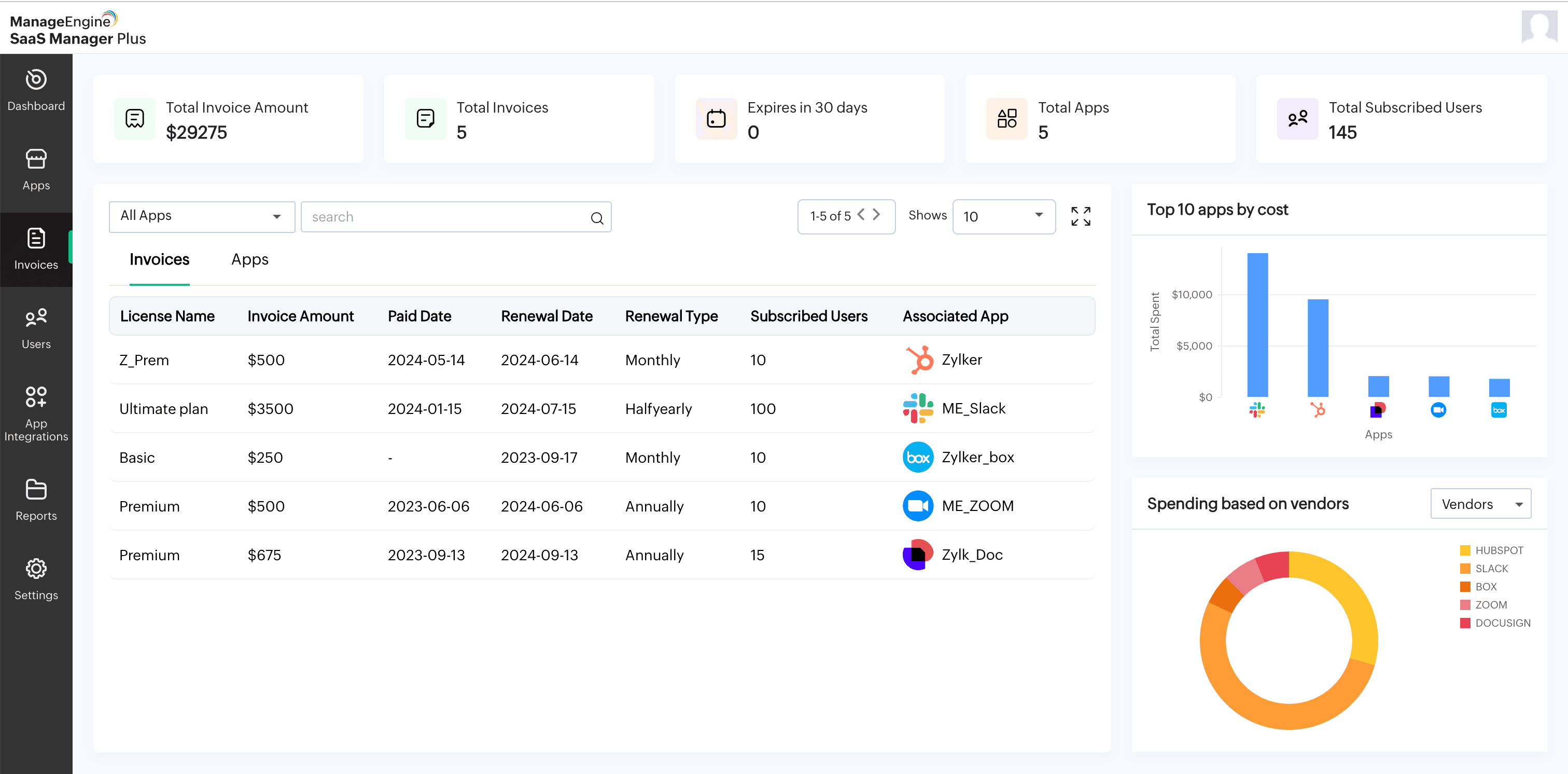
License optimization is effective only if usage tracking is enabled before renewal cycles.
SaaS spending optimization delivers measurable financial and operational impacts by aligning software investments with actual business usage. When implemented correctly, it improves cost efficiency, strengthens governance, and enhances strategic planning.
Direct cost savings are the most immediate and visible outcome. By identifying inactive users and reclaiming unused licenses, organizations eliminate unnecessary subscription expenses. They consolidate duplicate tools across departments to avoid paying for overlapping functionalities. Over time, this structured elimination of waste can reduce total SaaS spending significantly in many enterprises.
Accurate usage insights significantly strengthen vendor negotiations. Instead of relying on assumptions, procurement teams approach renewals with concrete data on active users and feature utilization. This transparency helps them negotiate volume discounts, remove unused premium add-ons, or adjust seat counts before a renewal. Data-backed conversations often shift leverage back to the buyer.
When employee exits are recorded in HR systems, automated deprovisioning ensures the immediate removal of application access. This reduces the risk of former employees retaining credentials to sensitive platforms. Consistent access governance supports regulatory frameworks and internal audit requirements. As a result, organizations lower their data breach exposure while maintaining compliance readiness.
Historical spending data and usage trends enable more accurate financial planning. By understanding seasonal fluctuations and department-level consumption patterns, finance teams can allocate budgets with greater precision. Forecasting becomes proactive rather than reactive, reducing unexpected overruns. This long-term visibility supports strategic investment decisions instead of short-term cost firefighting.
Finance leaders report 25% improved budget compliance after establishing budget ownership for department leaders.
Organizations gain a measurable ROI, improved cost efficiency, and stronger financial control. Beyond savings, centralized visibility turns SaaS from an uncontrolled expense into a strategic asset that leadership can confidently plan around.
In many organizations, departments independently purchase tools using corporate cards or departmental budgets. While this accelerates experimentation, it often results in duplicate subscriptions for similar functionalities. Over time, overlapping tools create unnecessary complexity and inflated costs. Without centralized oversight, tracking the total SaaS exposure becomes increasingly difficult.
Without granular usage tracking, optimization decisions rely on assumptions rather than data. Finance teams may see invoices, but they lack insight into how frequently applications are actually used. This disconnect makes it difficult to identify underutilized licenses or overprovisioned plans. As a result, renewals often proceed without meaningful evaluation.
Many SaaS contracts include clauses that trigger automatic renewals unless canceled in advance. Without structured renewal tracking, these contracts quietly roll over at existing seat counts or pricing tiers. This can lead to annual cost increases, even if usage has declined. Limited visibility into renewal timelines reduces your negotiation leverage.
Employees often resist giving up tools, even when usage data shows limited activity. Teams may perceive license removal as a productivity threat or fear disruptions to their workflow. Without transparent communication and data-backed reasoning, optimization efforts can create friction. Successful programs balance cost control with stakeholder alignment and trust.
Optimization without stakeholder alignment may cause internal friction.
Establish a quarterly SaaS review committee involving IT teams, finance teams, and department heads.
A structured governance framework ensures that SaaS spending optimization delivers long-term, repeatable results instead of one-time cost cuts. The goal is to embed visibility, accountability, and automation into everyday operations.
Every optimization initiative needs a clear owner. Assign a dedicated SaaS governance leader or committee responsible for visibility, reporting, and renewal oversight. Without defined accountability, optimization efforts become fragmented across IT and finance teams. Clear ownership ensures consistent reviews, faster decision-making, and measurable outcomes.
Set standardized inactivity benchmarks to trigger review workflows. For example, flag accounts that have been inactive for 30 or more days. These thresholds remove emotional bias from optimization decisions and create objective rules for license reclamation. Over time, consistent enforcement prevents seat sprawl and unnecessary upgrades.
All new SaaS purchases should route through IT or finance team approval processes. Centralized procurement prevents duplicate tools and ensures compliance reviews happen before contracts are signed. It also improves vendor consolidation and strengthens your negotiation power. This step transforms reactive spending into strategic investment.
When the HR team marks an employee as inactive or terminated, application access should be automatically revoked. Integrating identity systems with SaaS management tools ensures immediate deprovisioning across all platforms. This reduces both cost leakage and security risks. Automated offboarding also supports audit readiness and compliance requirements.
Track total SaaS spending divided by active employees on a monthly basis. This metric provides a clear efficiency indicator and highlights unusual growth trends. Comparing departments helps you identify overprovisioning or redundant tools. Consistent benchmarking supports proactive budgeting and sustainable cost control.
Companies implementing quarterly reviews reduce waste more than those with only annual audits.
Selecting the right SaaS cost optimization tool depends on your organization's size, operational complexity, and governance maturity. The platform you choose should not only provide visibility but also enable automation and long-term scalability. A structured evaluation framework helps prevent short-term decisions that lead to buyer's remorse later.
To make a confident, future-ready decision, evaluate potential tools against a clear set of functional and strategic benchmarks.
A strong platform must integrate natively with your SSO, HR, and finance systems. These integrations ensure accurate user mapping, life cycle tracking, and spending visibility. Without deep connectivity, data silos persist, and insights remain incomplete. Comprehensive integration forms the foundation for reliable discovery and automation.
Visibility alone is not enough; the tool must automate action. Look for workflows that trigger license reclamation when inactivity thresholds are met. Automated notifications and approval flows reduce manual effort while maintaining transparency with stakeholders. This capability ensures continuous rightsizing instead of periodic cleanups.
Renewal intelligence centralizes contract terms, seat counts, and expiration dates on one dashboard. Automated reminders before renewal deadlines provide time for renegotiating or downgrading plans. Advanced tools may also analyze usage trends to recommend optimal seat counts. Early renewal visibility directly impacts your cost savings and negotiation leverage.
The platform should support compliance frameworks by mapping application access to employee life cycle events. Automated deprovisioning and audit logs help you demonstrate adherence to regulatory standards. Real-time monitoring for unauthorized or shadow applications helps reduce your exposure risk. Strong compliance tracking protects both financial and reputational assets.
As your organization expands, the tool must support multi-entity, multi-region environments. This includes handling different currencies, time zones, and regulatory requirements. Scalable architecture ensures consistent governance across subsidiaries and remote teams. Choosing a globally capable solution prevents the need for migration as your business grows.
SaaS spending optimization is the continuous process of discovering, managing, and reducing unnecessary SaaS expenditures while maintaining operational efficiency. It involves usage analytics, license reclamation, contract management, and governance automation.
SaaS cost optimization is critical as organizations increasingly depend on these applications for operations. SaaS prices rose 12.2% in 2024 (4.5 times more than general inflation), driven by vendor hikes and renewals. Optimization ensures financial discipline and compliance readiness.
Platforms like SaaS Manager Plus track license usage, inactive accounts, renewal timelines, and shadow IT detection. They also automate license reallocation when inactivity is detected.
Tools with an automated discovery engine and finance system integrations help you eliminate shadow IT by detecting unauthorized subscriptions. When integrated with identity systems, they optimize both SaaS and cloud utilization through centralized governance. If implemented correctly, SaaS spending optimization transforms software from a cost center into a controlled, strategic investment.
